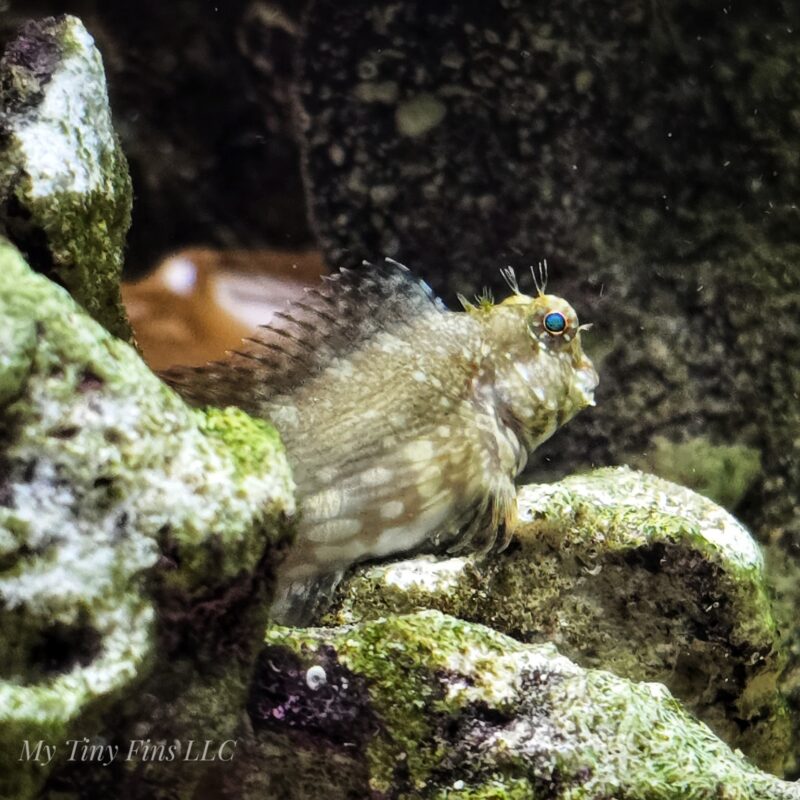
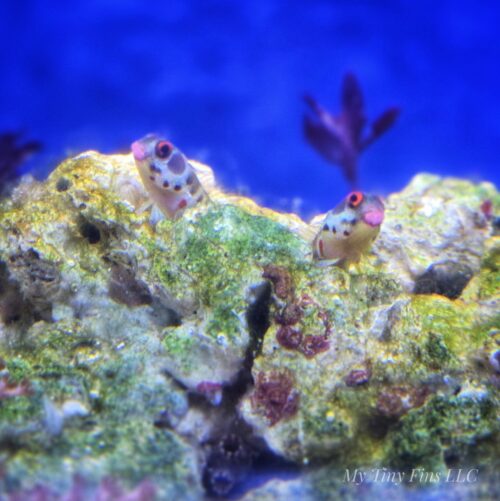
The Lawnmower Blenny (`Salarias fasciatus`), also known as the Algae Blenny or Jeweled Blenny, is a highly personable and incredibly utilitarian addition to the marine aquarium. Featuring a mottled pattern of tan, brown, and olive green, this fish is a master of camouflage that perfectly blends into live rock environments. They are famous for their expressive, frog-like faces adorned with bushy, eyelash-like appendages called cirri perched above their eyes. Beyond their endearing looks, they are highly sought after by aquarists for their insatiable appetite for nuisance algae.
Reef Compatibility
Simple Explanation: The Lawnmower Blenny is considered completely reef safe and is a welcome addition to most coral reef aquariums. They will spend their days hopping from rock to rock, “kissing” the stones to eat algae while completely ignoring your prized corals and invertebrates.
Care Requirements and Tank Setup
To thrive, a Lawnmower Blenny requires a well-established, mature aquarium with copious amounts of live rock to provide both grazing surfaces and secure resting places. A minimum tank size of 30 gallons is recommended to ensure enough surface area for natural algae growth to sustain their ravenous metabolism. They are generally peaceful community fish that ignore active swimmers, but they are highly territorial toward their own kind and other fish with a similar benthic, elongated body shape. Because they are notorious escape artists that can easily launch themselves out of the water when spooked, a tight-fitting mesh lid or glass canopy is an absolute requirement for their enclosure.
Quick Reference Care Guide
| Care Parameter | Ideal Specification |
|---|---|
| Minimum Tank Size | 30 Gallons |
| Temperature | 72°F – 78°F |
| Salinity (Specific Gravity) | 1.023 – 1.025 |
| pH Level | 8.1 – 8.4 |
| Temperament | Peaceful (Aggressive to conspecifics) |
| Reef Safe | Yes |
| Diet | Herbivore |
Dietary Needs and Feeding
The primary diet of the Lawnmower Blenny consists of microalgae, film algae, and hair algae that naturally grow on live rock and aquarium glass. They are voracious grazers that can quickly clear a tank of unsightly green fuzz, leaving distinctive lip marks on the glass as they eat. However, once the aquarium is clean, you must actively supplement their diet to prevent malnutrition and wasting. You should offer them high-quality herbivore preparations, such as spirulina-enriched flakes, sinking algae wafers, and sheets of dried marine algae (nori) attached to an aquarium clip.
Reviews
There are no reviews yet.