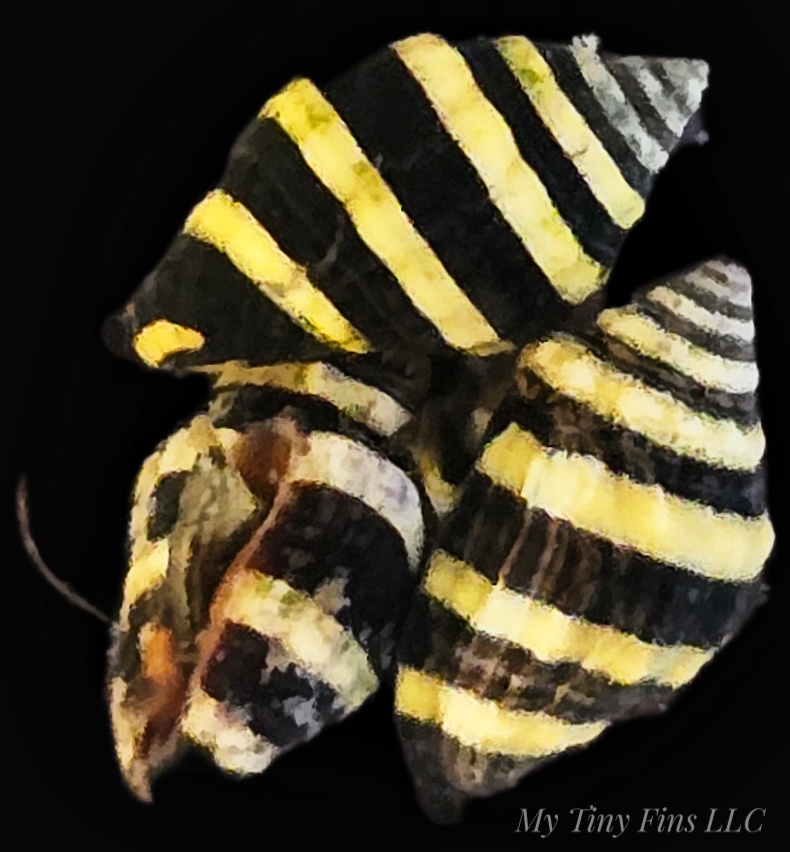
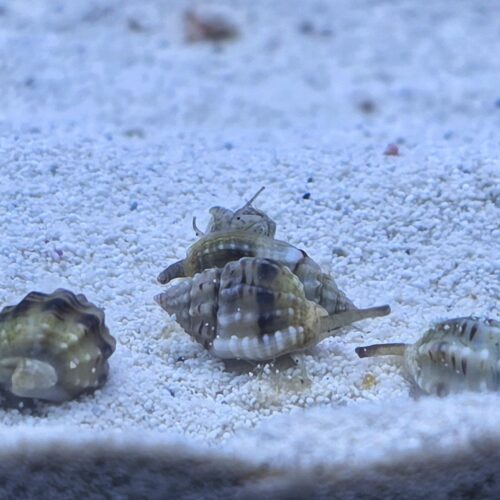
The Bumblebee Snail (`Engina mendicaria`) is a striking and highly functional addition to any marine clean-up crew. Reaching a maximum size of only about half an inch, these tiny gastropods are easily identified by their thick, intricately banded shells featuring alternating stripes of black and bright yellow or white. Unlike the vast majority of aquarium snails that endlessly graze on algae, the Bumblebee Snail is a specialized carnivore and detritivore. They are incredibly popular among reefkeepers not just for their beautiful appearance, but for their unique ability to hunt down specific nuisance pests that other clean-up crew members ignore.
Reef Compatibility
Bumblebee Snails are completely reef safe and will never consume, irritate, or damage your soft, LPS, or SPS corals. They are peaceful towards fish and strictly focus their attention on hunting in the rockwork and sand bed for meaty foods.
Care Requirements and Tank Setup
Because of their miniature size, Bumblebee Snails are perfect candidates for nano and pico aquariums, though they are equally effective when kept in larger groups within massive reef displays. They spend the majority of their time navigating the intricate crevices of live rock or burrowing shallowly into the sand bed, often becoming most active during feeding time or after the tank lights turn off. Like all marine invertebrates, they are highly sensitive to sudden changes in water chemistry and are strictly intolerant of copper-based medications and elevated nitrate levels.
Quick Reference Care Guide
| Care Parameter | Ideal Specification |
|---|---|
| Minimum Tank Size | 5 Gallons |
| Temperature | 72°F – 78°F |
| Salinity (Specific Gravity) | 1.023 – 1.025 |
| pH Level | 8.1 – 8.4 |
| Temperament | Peaceful |
| Reef Safe | Yes |
| Diet | Carnivore / Detritivore |
Dietary Needs and Feeding
It is a common misconception that Bumblebee Snails will clean your glass or rocks of nuisance algae; they are strict meat-eaters and will starve if expected to survive on a plant-based diet. Their primary role in the aquarium is consuming uneaten fish food, decaying organic matter, and the aforementioned pests hidden deep within the rockwork. In heavily stocked tanks that are fed heavily with frozen mysis or brine shrimp, they will usually scavenge enough leftovers to thrive on their own. However, in pristine reef environments, you must actively supplement their diet by dropping sinking carnivore pellets or small pieces of meaty seafood near their hiding spots to ensure their long-term survival.
Reviews
There are no reviews yet.