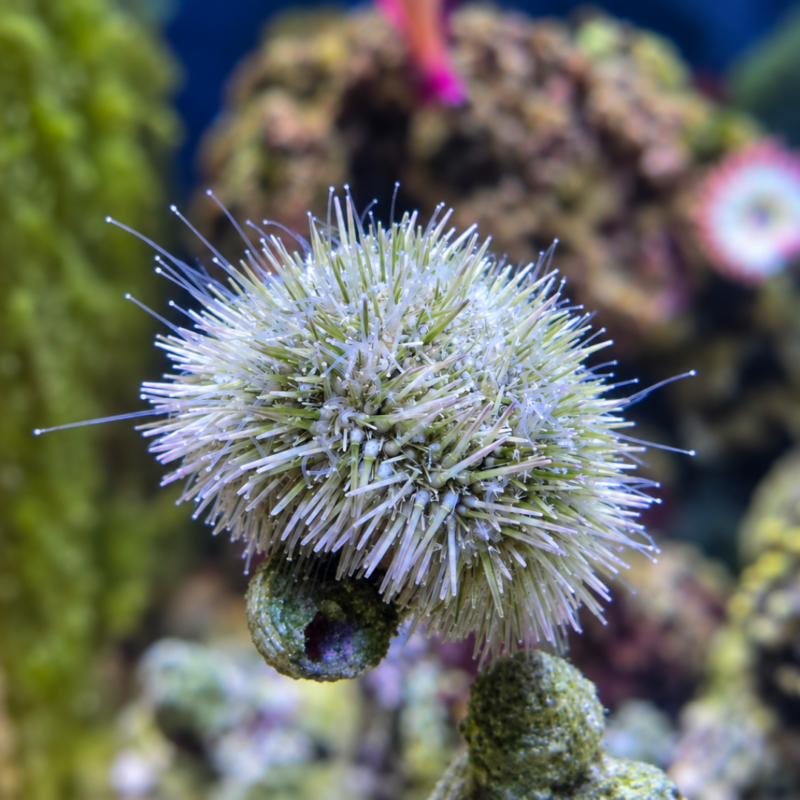
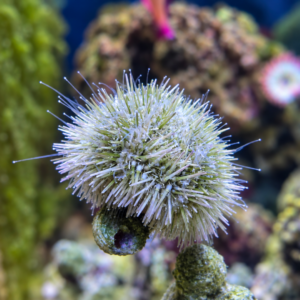
The Pincushion Urchin (`Lytechinus` spp.) is a fantastic, hard-working invertebrate that serves as a highly effective cleaner for the marine aquarium. Characterized by its classic dome shape and dense covering of relatively short, harmless spines, this echinoderm comes in a wide variety of colors, including pink, purple, blue, white, and green. They are fascinating to observe as they methodically navigate the tank using hundreds of tiny, transparent tube feet. Many Pincushion Urchins also display an endearing habit of picking up small pieces of rubble, empty snail shells, or macroalgae to carry on their backs for camouflage and protection from lighting.
Reef Compatibility
Simple Explanation: Pincushion Urchins are generally considered reef safe and are highly valued members of a clean-up crew. They will diligently graze on nuisance algae across your rockwork and glass while ignoring your fish, motile invertebrates, and established coral colonies.
Care Requirements and Tank Setup
Successfully keeping a Pincushion Urchin requires an established aquarium with highly stable water parameters, as they are exceptionally sensitive to sudden shifts in water chemistry. They also require proper levels of calcium, alkalinity, and magnesium to maintain their rigid exoskeleton (called a test) and keep their spines healthy. Because they are invertebrates, they are highly sensitive to high nitrates and will quickly perish if exposed to any copper-based medications.
Quick Reference Care Guide
| Care Parameter | Ideal Specification |
|---|---|
| Minimum Tank Size | 30 Gallons |
| Temperature | 72°F – 78°F |
| Salinity (Specific Gravity) | 1.023 – 1.025 |
| pH Level | 8.1 – 8.4 |
| Temperament | Peaceful |
| Reef Safe | Yes (Ensure corals are glued down) |
| Diet | Herbivore |
Dietary Needs and Feeding
The Pincushion Urchin is a voracious herbivore that will spend its entire day grazing on hair algae, complex macroalgae, and film algae covering the live rock and aquarium glass. In a large, mature reef tank, they can often sustain themselves entirely on the natural algae growth. However, in smaller tanks or impeccably clean systems, you must provide supplemental feedings to prevent them from slowly starving or dropping their spines. You can easily feed them by placing small pieces of dried marine algae (nori) directly onto their spines, and their tube feet will instinctively pass the food down to their mouth located on their underside.
Reviews
There are no reviews yet.