
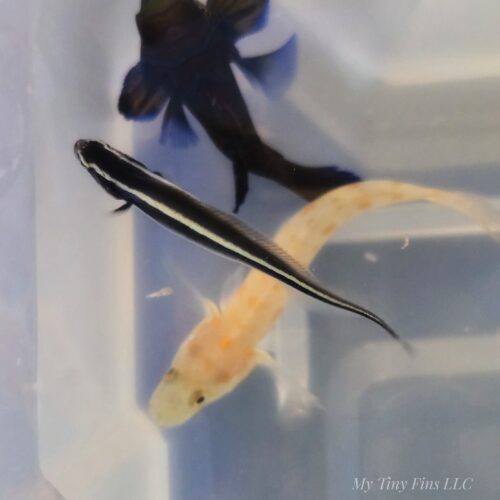
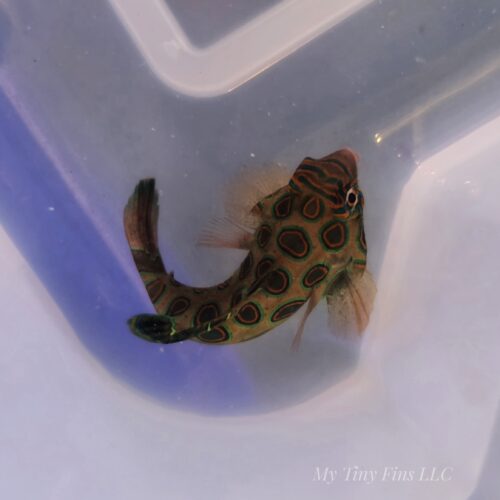
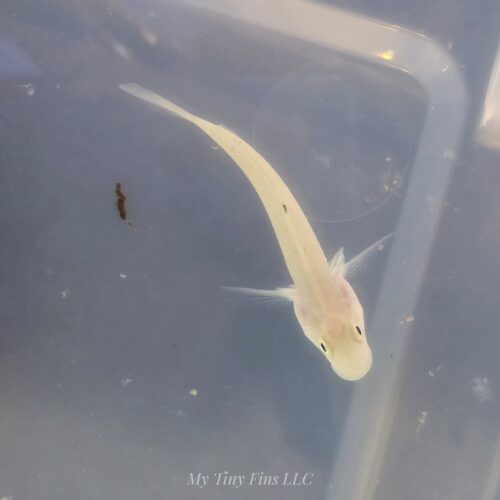
This is a WYSIWYG fish – What You See Is What You Get. The angelfish shown in the photos is the exact specimen you will receive from MyTinyFins, carefully acclimated and ready to establish itself in your reef.
Care Guide
Tank Size: Coral Beauty Angelfish do best in 75-gallon tanks or larger. They’re moderately active swimmers (3–4 inches) that need room to patrol, forage, and establish territory. Temperament: Semi-aggressive with a strong personality. They can be territorial toward other angelfish and may nip at corals, small crustaceans, and soft-bodied inverts, especially as they mature. Best kept singly or introduced as a bonded pair early. Monitor interactions with smaller, docile fish. Feeding: Omnivorous and opportunistic feeders. Provide a varied diet including high-quality pellets, flake food, frozen mysis shrimp, and herbivorous foods (spirulina, nori) 2–3 times daily. A diverse diet keeps them healthy and can reduce coral-nipping behavior. They’ll scavenge for food in the substrate and rock work. Lighting & Flow: Standard reef lighting is fine—they don’t have special lighting needs. Prefer moderate flow. They enjoy swimming through current but also appreciate sheltered areas to rest and forage. Shelter & Rockwork: Provide plenty of live rock and caves where they can hide, rest, and explore. They’re active foragers that spend time picking at algae, small organisms, and detritus in the rockwork. Water Parameters: Maintain stable salinity (1.025–1.026), pH (8.1–8.4), and temperature (72–78°F). They’re relatively hardy but prefer consistent, clean water conditions. Regular water changes help reduce aggression and stress. Tank Mates: Generally compatible with medium to large, peaceful fish species. Avoid keeping with aggressive fish, very small fish that might be chased, other angelfish, or docile species that won’t stand up to them. Use caution with delicate corals and small crustaceans—they may pick or nip. Coral Compatibility: While called “Coral Beauty,” they can be unpredictable with soft corals and LPS. Monitor closely; some specimens are reef-safe while others show more predatory behavior toward corals. Acclimation: Allow 30 minutes of drip acclimation for a smooth transition. They’re hardy fish but appreciate a gradual introduction to new water parameters. Behavior: Expect an active, inquisitive fish that constantly explores, forages, and claims territory. They’re engaging to watch and develop personality over time, though they can be bold and assertive in their domain.
Reviews
There are no reviews yet.